Beat the Heat: Your Guide to Smarter Summer Hydration
Summer is the season of backyard barbecues, pool days, and long afternoons spent on the golf course. It’s the perfect time of year to get active and enjoy the warmer weather. But as temperatures climb, so do the demands on your body.
Most of us have been given the classic recommendation to "drink plenty of water." But when the summer sun hits, that generic advice may fall short.
In actuality, proper hydration isn't a one-size-fits-all formula. It’s a dynamic balance influenced by numerous factors, including your body size, athletic demands, and climate conditions.
With that in mind, let’s break down the science of staying hydrated safely and effectively this summer.
Finding Your Personal Hydration Number
Your body's fluid needs depend heavily on your gender, body size, and how much you sweat. Larger bodies demand more water to support their metabolic processes, and intense summer workouts sharply elevate these requirements.
As a baseline, the Dietary Reference Intakes (DRIs) set forth by the National Academies of Sciences, Engineering, and Medicine recommend the following total daily fluid intakes for adults, including water from both beverages and food:
Adult Women: ~91 ounces (approx. 11 cups). Add 16 to 24 ounces for every hour of moderate-to-intense exercise or heavy sweating.
Adult Men: ~125 ounces (approx. 15.5 cups). Add 16 to 24 ounces for every hour of moderate-to-intense exercise or heavy sweating.
Scaling for Bodyweight
For a more individualized guideline, simply take your weight in pounds, divide it in half, and aim to consume that many ounces of fluid throughout the day.
Using myself as an example, at a bodyweight of 170 pounds, I would aim to get in 85 ounces of fluid on a baseline, non-training day, as this formula does not account for heavy exertion or excess sweating.
Hydration During Exercise
To determine how much fluid you should be consuming during exercise or demanding cognitive tasks, we can utilize the Galpin Equation, developed by Dr. Andy Galpin, a world-renowned professor and human performance scientist.
In this instance, we’ll take our bodyweight in pounds, divide that number by 30, and aim to consume that many ounces of fluid every 15-20 minutes.
Again, using myself as an example, at 170 pounds, I would strive to take in about 5.5 ounces of fluid for every 15-20 minutes of strenuous activity.
Does Coffee Count?
If you’re anything like me and look forward to your morning cup of coffee or the occasional energy drink, you’ve probably been given the warning, "Caffeine dehydrates you!”
Fortunately, contemporary research suggests that this isn't entirely true.
While caffeine is a mild diuretic (a substance that increases urine production), the volume of fluid contained in your coffee, tea, or energy drink vastly outweighs any minor diuretic effect, especially if your body is accustomed to using caffeine on a regular basis.
Now, while your morning coffee absolutely counts toward your hydration goals, it is worth mentioning that excessive or poorly timed caffeine consumption can lead to a host of unpleasant side effects, including gastrointestinal (GI) discomfort, feelings of anxiety, and sleep disruption.
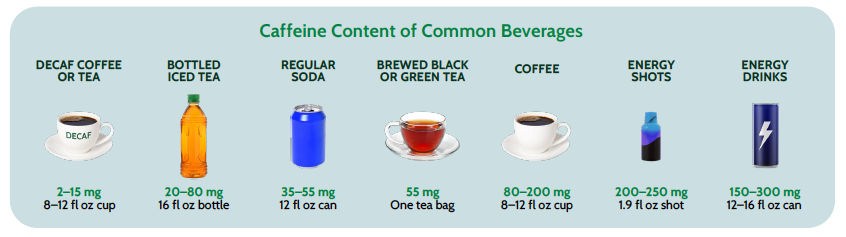
That said, many of these potential issues can be mitigated by limiting your overall daily intake to a reasonable level (<400mg for most adults), avoiding caffeine on an empty stomach, and cutting off caffeinated beverages at least 8-10 hours prior to your bedtime due to caffeine’s lengthy biological half-life (i.e., the amount of time it takes for half the concentration of a substance to be metabolized by the body).
The Power of Electrolytes
When you sweat, you aren't just losing water. You are also losing essential minerals known as electrolytes. These include sodium, potassium, magnesium, calcium, and chloride.
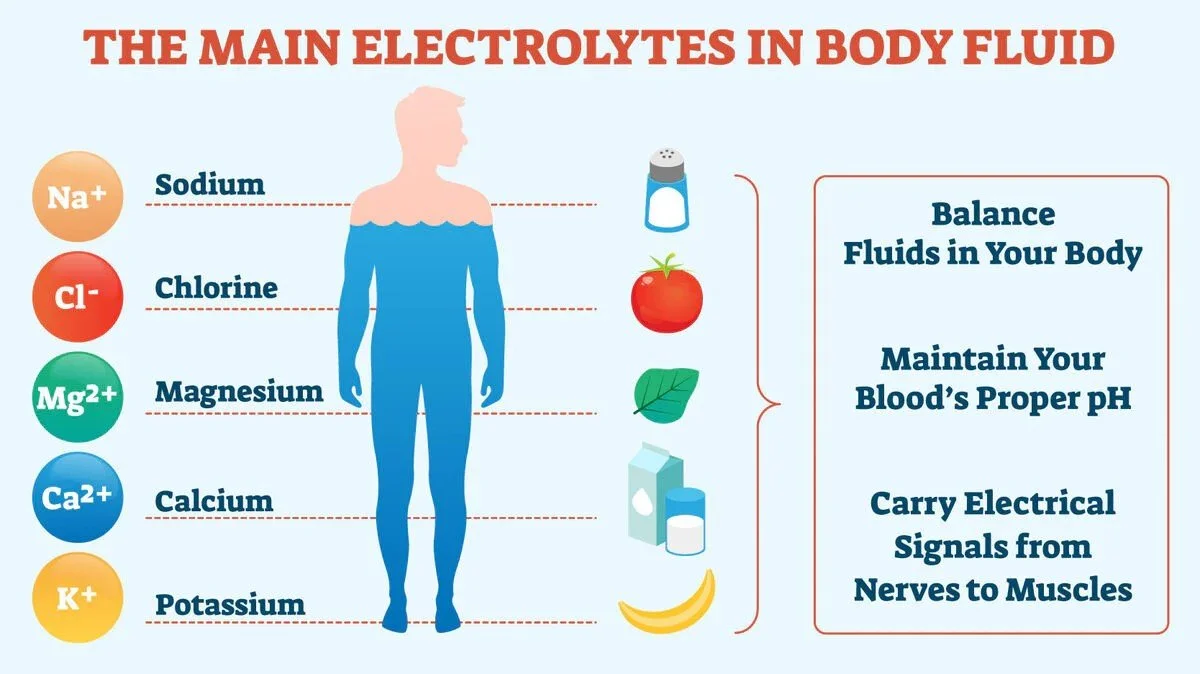
As described in the graphic above, electrolytes carry ionic charges that help your body equilibrate fluid levels, maintain proper blood pH, and keep muscles firing efficiently.
Drinking massive quantities of plain water alone without replacing these minerals can lead to a serious health condition called hyponatremia, where the concentration of sodium in your blood becomes abnormally diluted. Early warning signs include headaches, muscle cramps, fatigue, and nausea.
Luckily, on most days, you should get plenty of fluid and electrolytes by following a balanced diet and drinking an adequate amount of water.
However, if you are exercising strenuously for more than 60 minutes in the summer heat or spending hours working outdoors, plain water and the electrolytes contained in food alone might not cut it.
Under these circumstances, I highly recommend adding in an electrolyte supplement or low-sugar sports drink to keep your cellular balance intact.
Personally, I’ve been using Thorne’s Daily Electrolytes on hot, humid training days. Their single-serving stick packs are convenient, sugar-free, and contain clinically-backed amounts of all the electrolytes commonly lost in sweat.
Final Takeaways
As I’ve hopefully convinced you of by now, staying properly hydrated is one of the simplest, yet most impactful, ways to protect your health, energy, and cognition throughout even the hottest months of the year.
By listening to your body, matching your fluid intake to your activity levels, and keeping your electrolytes in check, you can thrive in the heat instead of having to navigate around it.
Lastly, if you’re looking to optimize your performance, enhance your recovery, or overcome an injury, our team at Movement Spine & Sport is here to help! Click here to schedule a consultation or your first visit with one of our providers today.
Let's make this your healthiest, most vibrant summer yet!
Ryan Lesik, D.C., CSCS
Movement Spine & Sport