The Best Kept Secret in the Supplement Aisle
What if there were a supplement that could help preserve your muscle mass and strength as you age, lift the fog of depression, and potentially even slow the cognitive decline linked to Alzheimer’s disease?
Sounds almost too good to be true, right?
Now, what if I told you that supplement is creatine?
If your first thought was, “Isn’t that just for bodybuilders?” you’re not alone. For years, creatine has been typecast exclusively as a muscle builder for gym rats.
That misconception has kept a lot of people—especially women and older adults—from reaping the benefits. In reality, creatine is one of the safest and most effective supplements on the planet, backed by thousands of studies across the past five decades.
What Is Creatine?
Creatine is a natural compound derived from three amino acids: arginine, glycine, and methionine. You can also consume it through your diet, primarily from red meat and fish.
Roughly 95% of the creatine in your body is stored in your muscles, with the remainder found in the heart and brain. Think of it as a metabolic power source, helping your cells quickly regenerate energy during periods of high output.
While it’s famous for helping athletes squeeze out "one more rep," that same energy support is exactly what helps your mind stay sharp and your mood stay balanced.
You Probably Aren't Consuming Enough
Most people’s creatine stores are only about 60% full. Why? Because it is nearly impossible to attain therapeutic doses from food alone.
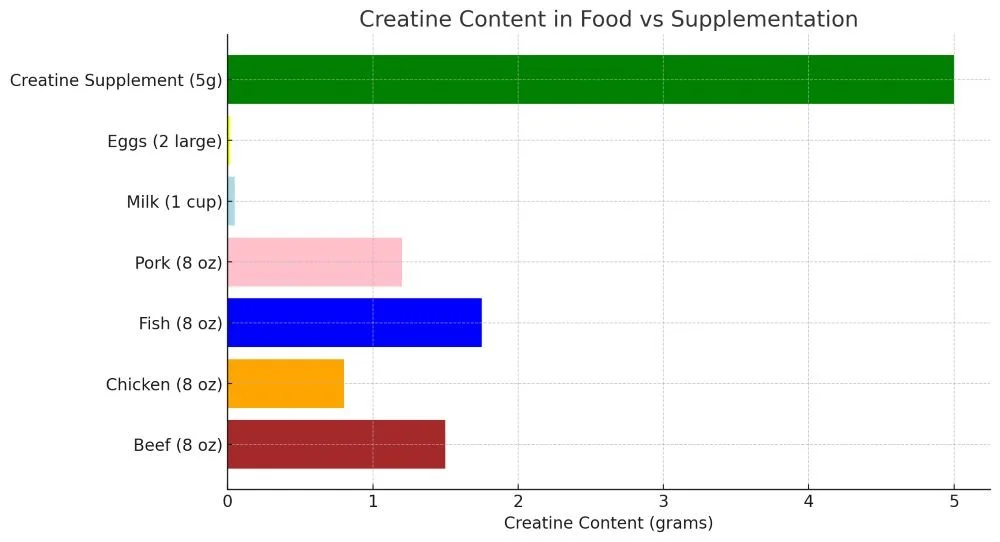
The majority of creatine supplements contain 5 grams of the compound. To get that same amount from food, you’d have to eat about 2.5 pounds of uncooked red meat. For nearly all of us, especially those following a vegetarian or vegan diet, supplementation is the only way to fully saturate those stores.
3 Reasons to Reconsider Creatine
1. It’s Your Secret Weapon Against Aging
As we age, it becomes harder and harder to hold on to muscle tissue—and that impacts everything from balance and coordination to independence and overall quality of life.
Fortunately, creatine supplementation can help.
A recent meta-analysis found that adults over age 50 who supplemented with creatine while engaging in whole-body resistance exercise gained an average of nearly 3 pounds more lean mass than those who underwent the same training program, but received a placebo.
When combined with resistance training, creatine is a potent tool to help you build muscle and strength—which is paramount in mitigating conditions like sarcopenia (age-related muscle loss), osteoporosis, and frailty.
2. It May Help Fight Depression
As the most metabolically active tissue in the human body, your brain is an energy hog. And, just like your muscles, your brain uses creatine too.
Creatine helps sustain energy production inside brain cells, particularly in the areas that help regulate mood and cognition.
With this in mind, it should not come as a surprise that low brain creatine levels have been tightly linked to more severe depressive episodes, especially in females.
At present, there have only been a small handful of experimental studies on creatine supplementation for managing depressive symptoms. Though much work remains to be done, the results thus far look promising.
In one randomized controlled trial (RCT), adult women diagnosed with major depressive disorder who augmented their selective serotonin reuptake inhibitor (SSRI) medication with 5 grams of creatine monohydrate experienced both quicker and greater overall symptom improvement than those taking the medication alone.
3. It Might Keep You Sharp
Emerging research is also exploring creatine's role in neuroprotection and staving off cognitive decline, even in those with pre-existing dementia.
In a small pilot study at the University of Kansas, participants with Alzheimer’s disease who were given high-dose (20g/day) creatine monohydrate for 8 weeks saw an 11% average increase in brain creatine levels, alongside marked improvements in memory and attention.
Researchers believe that these benefits may have stemmed from creatine’s ability to support mitochondrial health and reduce oxidative stress in the brain.
Is Creatine Safe for Women?
Yes—and it may be even more beneficial for women than for men.
Due to differences in dietary patterns and overall body size, women typically demonstrate 70% to 80% lower natural creatine levels than their male counterparts.
Despite this, many women avoid creatine supplementation for fear of becoming “bulky” or gaining unwanted weight.
In actuality, if you do happen to notice a slight nudge on the scale when beginning to take creatine, it’s simply the product of cellular hydration—your muscles drawing in more water, which makes them appear fuller and perform better. Moreover, this subtle increase in bodyweight is almost always temporary, leveling off once muscle creatine stores reach full saturation.
How to Begin: A Practical Guide
While multiple forms of creatine exist, the gold standard is creatine monohydrate. It’s the most research-backed, most affordable, and most effective form.
Dosing Options
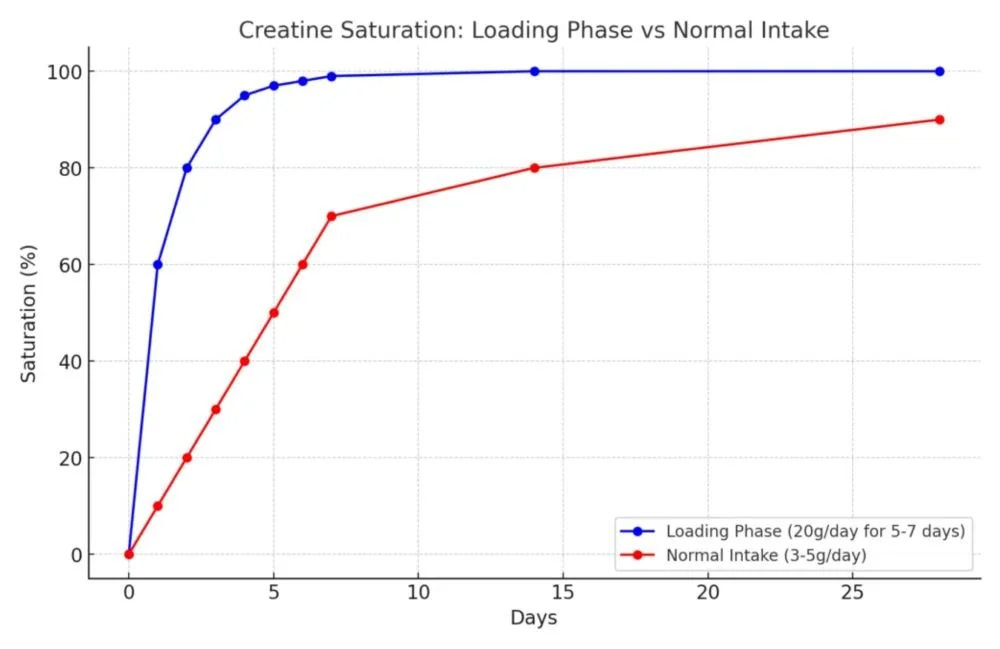
The Fast Track (Loading): Take 20 grams per day (split into 4 equal doses) for 5 days to saturate your muscle creatine stores quickly, then drop down to a maintenance dose of 5 grams daily.
The Slow & Steady: If you prefer to skip the loading phase and any potential gastrointestinal (GI) discomfort, simply begin with 5 grams per day from the start. You’ll reach full saturation within about 3–4 weeks.
Pro Tips for Success
Being a flavorless powder, creatine can be mixed into any beverage of your choosing—including tea and coffee.
Regarding timing, research hasn’t been able to demonstrate any appreciable differences between taking creatine before a workout, afterwards, or at another time of the day.
Like many other health-promoting behaviors, the real key is consistency. Daily consumption is what allows you to achieve and maintain full stores throughout your muscles and brain.
Finally, as is the case with any dietary supplement, it is important to verify that the products you are purchasing are free of contaminants and actually contain the ingredients and amounts listed on the label.
For that reason, I personally use products from Thorne, many of which contain the NSF Certified for Sport seal, meaning that they are independently third-party tested for over 250 banned substances and recognized as safe for use across professional sporting organizations like the NFL, NBA, and MLB.
To view a complete listing of my favorite and most frequently recommended Thorne supplements, you can visit my online dispensary.
The Bottom Line
Whether you’re looking to stay strong well into late adulthood, boost your mental health, or just have more “get up and go.” creatine belongs in your arsenal.
It’s no longer just for hardcore gym-goers - it’s for everyone.
Ryan Lesik, D.C., CSCS
Movement Spine and Sport