The Great Stretching Debate: Why Your Warm-Up Might Need an Upgrade
It’s the perennial question in the world of fitness and rehab: Should I be stretching?
For years, static stretching—holding a stretch for a prescribed amount of time—has been a staple in warm-up and cool-down routines. Moreover, stretching has been widely accepted as a cornerstone in increasing flexibility and staying injury-free. Many people rely on static stretching routines before activity because they enjoy the feeling and internalize it as lengthening their tissues, helping them feel "loose."
But what if I told you that the stretch you feel isn't actually making your muscles more extensible?
The New Science of Stretching
Several studies have now challenged the long-standing belief that static stretching leads to changes in muscle length. In fact, this growing body of research suggests that when you observe an improvement in range of motion (ROM) following a stretching protocol, it's primarily due to an increase in your body’s tolerance to the sensation of stretch, not a physical lengthening of the muscle tissue itself.
So, where do real long-term changes in ROM come from?
Modern research indicates that eccentric loading (i.e., the lowering phase of a lift) performed through a full range of motion can provide the same, if not greater, increases in joint range of motion as stretching. The crucial difference is that these gains come from actual muscular adaptations, rather than just a temporary nervous system response. This distinction is critical for long-term benefit and injury risk reduction.
It’s All About Positioning
The common complaint of "muscle tightness" is often misinterpreted. It is most likely a byproduct of poor joint position, rather than a muscle simply being shortened.
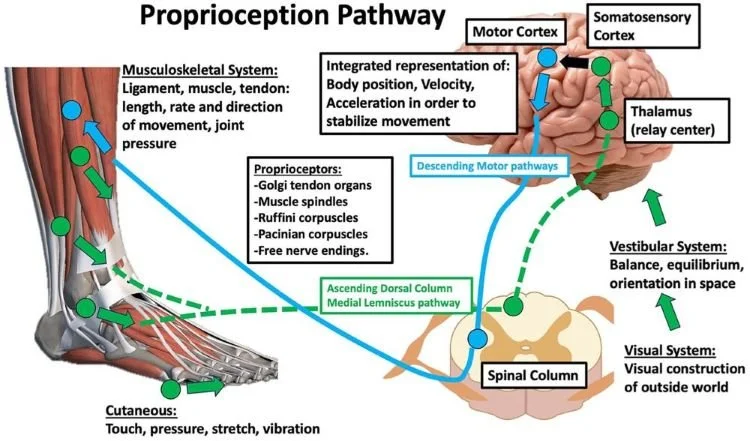
It’s important to remember that your brain is the ultimate regulator of muscular tone, and it bases its feedback on your skeletal position, not just the state of the muscle in isolation. If your body is in a poor or compromised position, your brain can create a sensation of tightness as a protective mechanism.
This is why we advocate for using static stretching sparingly—typically only as a temporary fix to help you achieve the range of motion needed to get into a better position under load. Once you can train effectively in better positions, you will create the desired adaptations to help you maintain a healthy, mobile, and resilient body.
Streamline Your Warm-Up: The 3-Step Framework
An effective warm-up routine doesn’t need to be overly complicated or time-consuming. Rather, simplicity is key.
We recommend a straightforward, three-step framework:
Warm-up: Start slowly with generalized movements to increase circulation and elevate your core body temperature.
Activate: Focus on targeting the specific muscle groups, joints, and movement patterns you plan to use heavily during your workout.
Potentiate: Gradually increase the load and intensity to the desired range for your first programmed exercise.
Don't overcomplicate it—your body is built to move. Get into good positions, load them intelligently, and create lasting adaptations.
Finally, if you’ve been dealing with pain, tightness, or limited mobility that is hindering your performance, click here to get in contact with one of our expert clinicians.
Ryan Lesik, D.C., CSCS
Movement Spine and Sport